Chapter Zero Slovenia
SMRs Could Strengthen Slovenia’s Energy Security, but Deployment Challenges Remain
Ljubljana, 29 May 2026 – Small modular reactors could play an important role in Slovenia’s future energy mix, particularly as coal phase-out, electrification, industrial demand and digital infrastructure increase the need for reliable low-carbon electricity. While SMRs are seen as a potentially more flexible and faster-to-deploy alternative to large nuclear projects, the Chapter Zero Slovenia event showed that their use in Europe is still some distance away. Key challenges remain around national policy direction, licensing, technology maturity, financing, suitable locations, local acceptance, and the readiness of energy systems to integrate new baseload capacity.
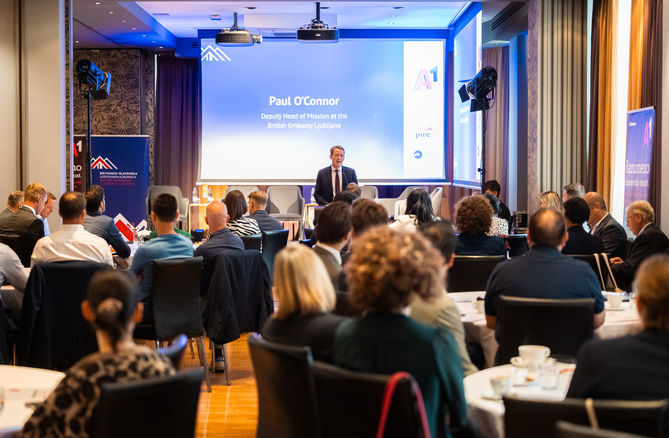
The event was opened by Barbara Uranjek Kozina, Member of the Management Board of Chapter Zero Slovenia and CEO of the British-Slovenian Chamber of Commerce, who framed Slovenia’s rising electricity demand as a strategic governance question: “The green transition is not just about reducing energy use, it is fundamentally about shifting it to electricity. This is where nuclear innovation, and specifically SMRs, can enter the boardroom and the national policy conversation.”
The first panel, moderated by Žiga Fišer, Senior Trade Consultant at the British-Slovenian Chamber of Commerce, focused on how close SMRs are to becoming a viable part of Europe’s energy system.
The relevance of SMRs lies not only in their potential to provide clean electricity, but also in the industrial model behind them, clarified Dejan Spasovski, Founder and Owner of ESGnovo. Unlike traditional nuclear projects, SMRs are based on modularity, standardisation and repeatable deployment. For Slovenia, this opens a broader discussion on how they could support industrial heating, hydrogen production, advanced manufacturing and AI-driven infrastructure, while also creating opportunities for Slovenian companies in nuclear value chains, from engineering, construction and specialised manufacturing to digital systems, maintenance and long-term operational support.
The UK has placed nuclear alongside renewables in its long-term net-zero and energy-security strategy. As Slovenia considers its energy future, Nigel Baker, Chargé d’Affaires at the British Embassy in Ljubljana, underlined that “the UK’s experience shows renewables and nuclear must go hand in hand. SMRs are central to energy security and the net zero transition. Following its selection to deliver the UK’s first SMRs I am delighted that Rolls Royce SMR is looking at the strong potential of other markets like Slovenia. The UK stands ready to share expertise and partner with Slovenia to turn ambition into secure, investable projects.”
Rolls-Royce SMR is built around proven nuclear technology, familiar fuel and a standardised power plant design, with the aim of reaching the market quickly and safely. Alexis Honner, Business Development Manager at Rolls-Royce SMR, explained that licensing will still be required in each country, but that the company’s UK Generic Design Assessment is already in its final stages, providing an important reference point for the maturity and safety of the design. They expect SMRs to be ready for deployment in 2035.
The Czech Republic has taken a direct stake in SMR development through ČEZ Group, which acquired a 20 percent share in Rolls-Royce SMR as part of a strategic partnership aimed at deploying up to 3 GW of SMR capacity. Sebastián Poche, Senior BD Specialist, SMR Development Department at ČEZ Group, explained that SMRs are part of the Czech strategy to replace coal, which still accounts for almost 40 percent of the country’s electricity generation. The ownership stake also means that ČEZ is not positioning itself only as a future customer, but as a development partner in the technology, deployment model, and supply chain.
In South-Eastern Europe, too, the energy transition is still shaped by coal dependence, as well as limited investment capacity, noted Mislav Slade-Šilović, Director at the PwC SEE Strategic and Operational Consulting Team. The region remains heavily exposed to coal, while demand is rising due to electrification, industry, and data centres. Renewables are growing, but permitting, grid constraints, and limited capital mean they are unlikely to close the gap alone. In this context, SMRs might play an interesting role, though deployment will depend on timing, planning, and investment readiness.
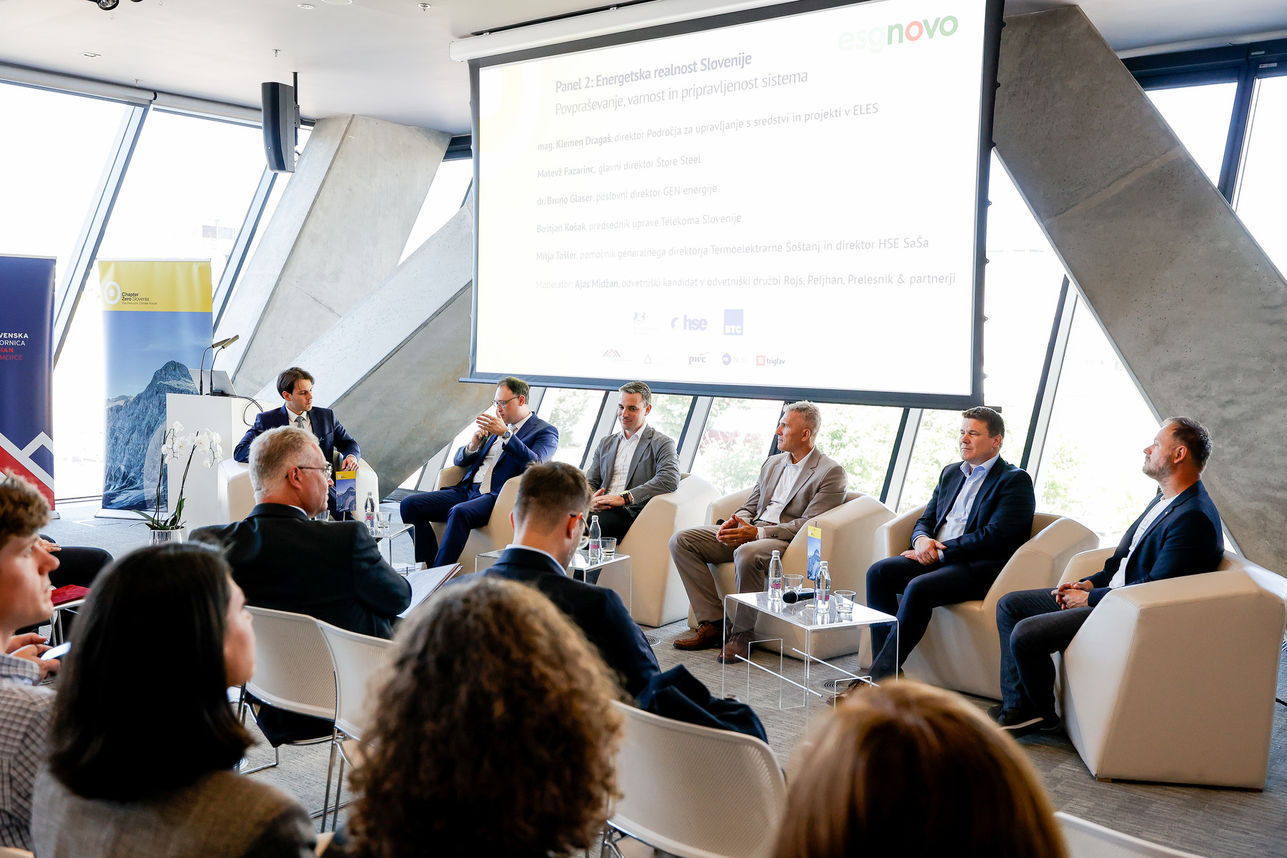
The second panel, moderated by Ajas Midžan, Associate at Law Firm Rojs, Peljhan, Prelesnik & Partners, placed SMRs in the context of Slovenia’s potential energy mix.
New large electricity consumers are emerging in Slovenia, from data centres to the electrification of industry, transport, and heating. Klemen Dragaš, MSc, Asset and Project Management Director at ELES, explained that this will require “more electricity, greater system flexibility, and the careful integration of new generation technologies, including SMRs.” ELES must therefore plan long-term grid development to ensure “reliable supply, system stability and competitive conditions for economic development.”
For energy-intensive industry, affordability and predictability are already central to competitiveness. Matevž Fazarinc, Managing Director of Štore Steel, pointed out that Slovenian companies are facing less competitive conditions than those in other markets due to electricity costs, particularly following higher network charges. In his view, a more comparable framework for electricity prices at the European level would create fairer conditions for the sector.
Digital infrastructure adds another layer to Slovenia’s future energy needs. Boštjan Košak, President of the Management Board of Telekom Slovenije, explained that modernisation of telecommunications has improved energy efficiency, but AI and data centres are changing electricity demand. While Slovenia is unlikely to host large-scale AI training data centres, AI use and digital infrastructure will still require reliable and predictable electricity supply.
PhD Bruno Glaser, COO of GEN energija, on the other hand, questioned how realistic Slovenia’s target of reaching at least 33 percent renewables in final energy consumption by 2030 is, given the practical limits of expanding hydro, wind, and solar generation. In his view, intermittent renewable sources alone cannot ensure system stability, which keeps nuclear energy among the key low-carbon sources for reliable supply. On SMRs, he pointed to three main challenges for Slovenia: suitable locations with local acceptance, licensing, and technology maturity, as Europe does not yet have a reference project in operation.
Šoštanj appeared as a potential location for SMRs. Mitja Tašler, Assistant Director of the Šoštanj Thermal Power Plant TEŠ and CEO of HSE SaŠa, noted that the site appears well positioned in terms of grid connection and transport links, while the main challenge could be its proximity to residential areas. He stressed that they would like Šoštanj to remain among the locations considered for SMRs, with the aim of maintaining resilience and supporting a just and sustainable energy transition.
We would like to thank our Main Partner – ESGnovo, Event Partners – British Embassy Ljubljana, HSE & BTC, and Chapter Zero Slovenia Partners – Slovenian Directors' Association, PwC Slovenia, Zavarovalnica Triglav & NLB.
The photo gallery is available here.
Photo: Saša Despot (Mediaspeed)