Chapter Zero Slovenia
Entering the UK Market: Why Good Preparation, Business Culture, and Personal Connections Matter
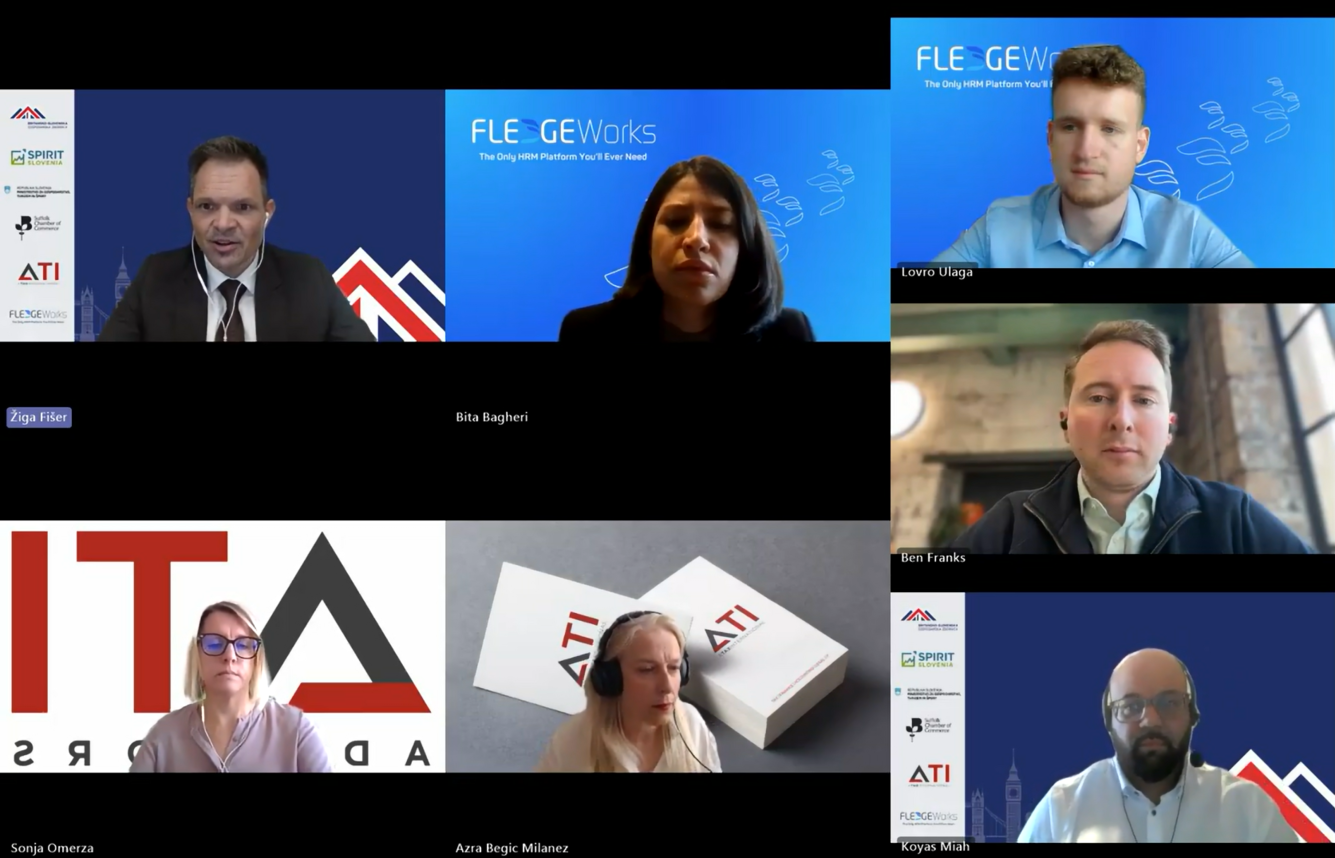
Ljubljana, 22 April 2026 – Successfully entering the UK market requires more than just a good product. It calls for a clear strategy, an understanding of the regulatory environment, adaptation to local demand, understanding of the business culture, and above all, an active presence on the ground. At the latest webinar "How to Enter the UK Market," organised in cooperation with SPIRIT Slovenia, the Ministry of the Economy, Tourism and Sport, and the Suffolk Chamber of Commerce, we provided a practical overview of the key steps for a successful market entry, ranging from tax and legal aspects to opportunities for establishing your first partnerships and lessons learned.
Key aspects of preparing for market entry were presented by Azra Begič Milanez and Sonja Omerza from A Tax International. They emphasized that companies must decide early on how to enter the market, whether to establish a UK-based company, open a branch, or operate from Slovenia, as each option carries different tax, legal, and administrative implications. They also highlighted the importance of addressing tax registrations, employment requirements, and customs procedures, as the UK, being outside the EU, introduces additional obligations such as customs declarations, rules of origin, and compliance with local standards.
Concrete business opportunities were outlined by Koyas Miah from the Suffolk Chamber of Commerce, who explained why East England can serve as an effective entry point to the UK market. The region provides direct access to global shipping routes via the Port of Felixstowe, the UK’s largest container port, and benefits from strong connectivity to London and other key markets. It also offers a skilled workforce, well-developed logistics infrastructure, and strong institutional support for international businesses. This combination makes it a practical base for companies looking to establish supply chains or expand their operations in the UK.
A more market-specific perspective was provided by Ben Franks of Ben Franks Wine, who shared insights into the UK wine market. He described it as one of the most competitive and saturated markets globally, where entry can be challenging but highly rewarding. Success, he noted, depends less on volume and more on clear positioning, brand building, and a strong understanding of pricing structures, as final prices are shaped by multiple intermediaries, duties, and margins. UK consumers, he added, are increasingly looking for quality, authenticity, and differentiation, particularly in premium segments.
A recent example of a Slovenian company entering the UK market was shared by Lovro Ulaga and Bita Bagheri from FledgeWorks, a provider of HRM software solutions. They outlined how the company spent the past year preparing for entry, emphasising the importance of thorough preparation before engaging with the market. It all began with a market research, deep understanding of local customer needs and adapting the offering accordingly. Their experience showed that traditional approaches such as cold calling yield limited results, while in-person engagement, carefully selected events, and pre-arranged B2B meetings are far more effective. They also stressed the importance of understanding business culture, which in the UK tends to be more indirect and built on gradually establishing trust.
In the final part of the webinar, Žiga Fišer from the British-Slovenian Chamber of Commerce introduced the Chamber’s new UK Market Entry Platform, designed to provide structured support to companies throughout the key stages of internationalisation, from strategy development to securing initial business connections. He also shared more about the upcoming Export Delegation to Manchester, taking place from 19 to 21 October 2026, which will offer Slovenian companies the opportunity to participate in targeted B2B meetings, establish new contacts, and meet potential partners in the UK market.